OVERVIEW
Mobile App for Brooks Equipment
While working for Pratt-Miller Engineering, I served as the Solutions Architect for several projects, including this effort for Brooks Equipment. During this project I was the UX Designer, Scrum Master, and Product Lead, working directly with two software engineers in a pure Agile environment with weekly check-ins and code demos with the client.

SITUATION
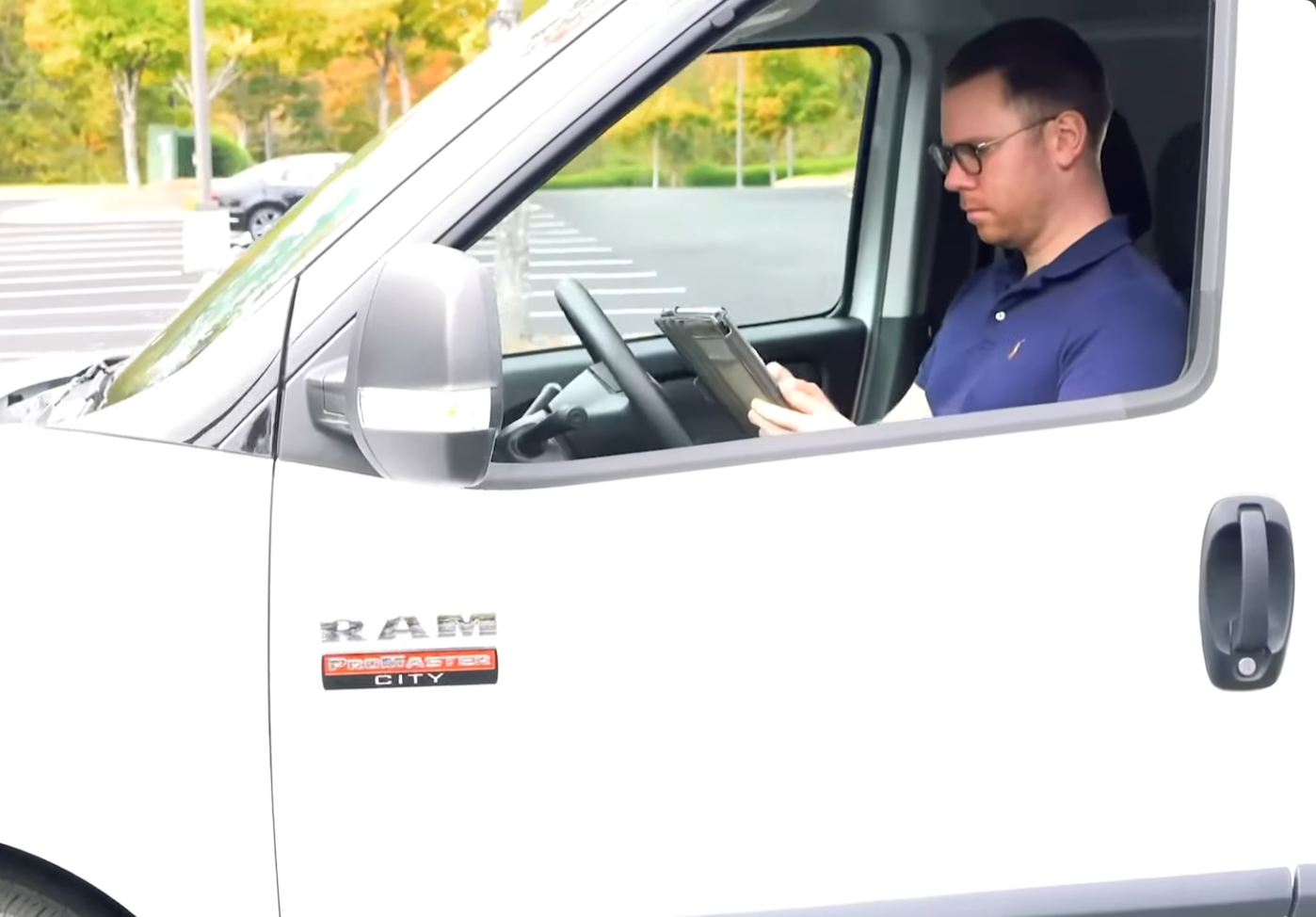
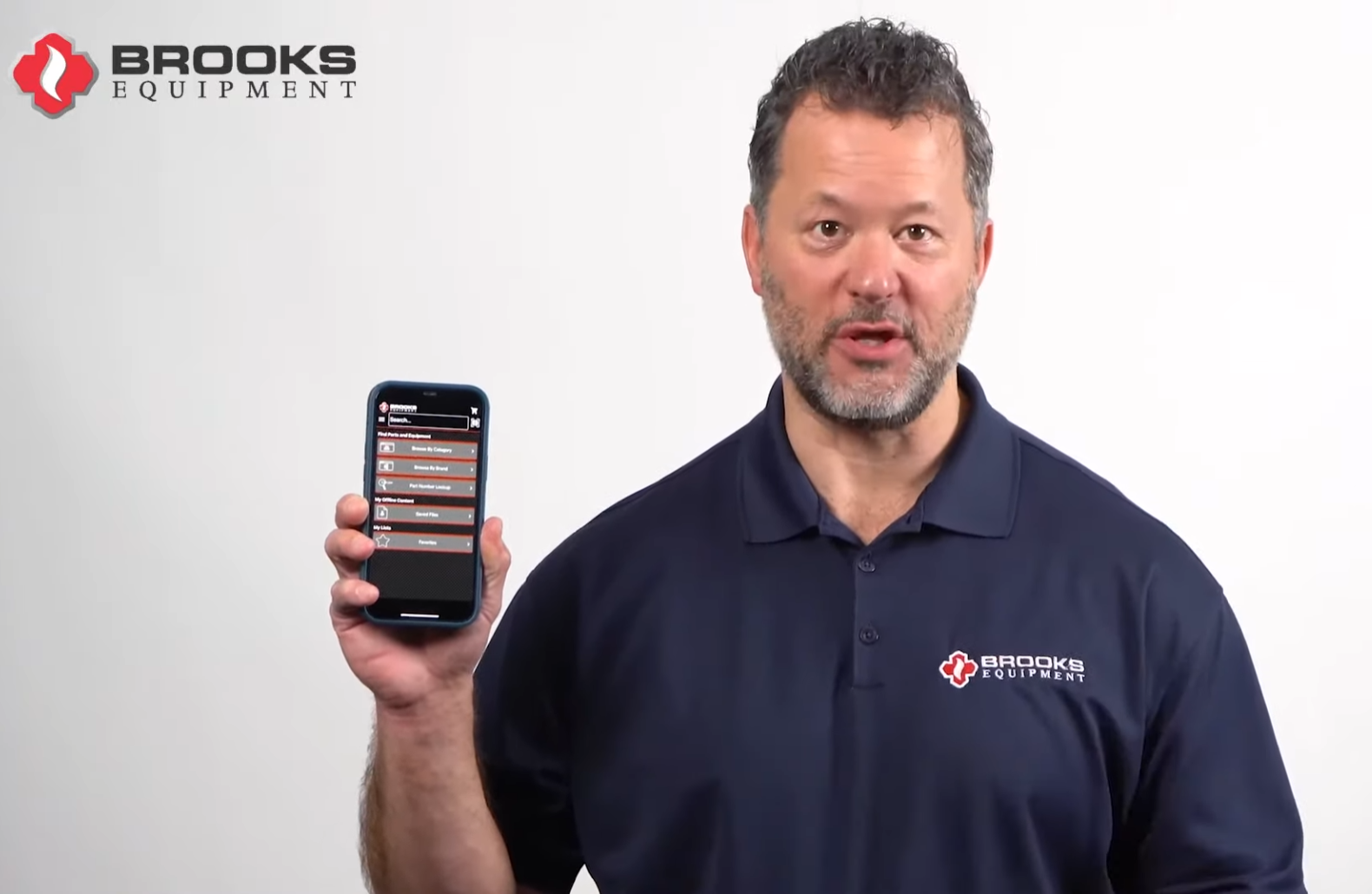
Field installers for Brooks Equipment—a major fire equipment distributor—frequently needed to design safety layouts and generate customer quotes while working on-site or from their vans.
However, the existing Brooks website was difficult to navigate on small screens, and installers often worked in buildings with no internet or mobile signal, making real-time access to product data, pricing, and ordering impossible.
TASK
The objective was to design a robust mobile application specifically for installers that would allow them to design fire safety layouts, access technical product information, manage pricing, and place orders directly from the field.
A critical requirement was ensuring the "killer feature" functionality: full offline access to essential content when connectivity was unavailable. This required careful consideration of what content was defined as essential, as well as streamlining the Information Architecture for easy navigation.
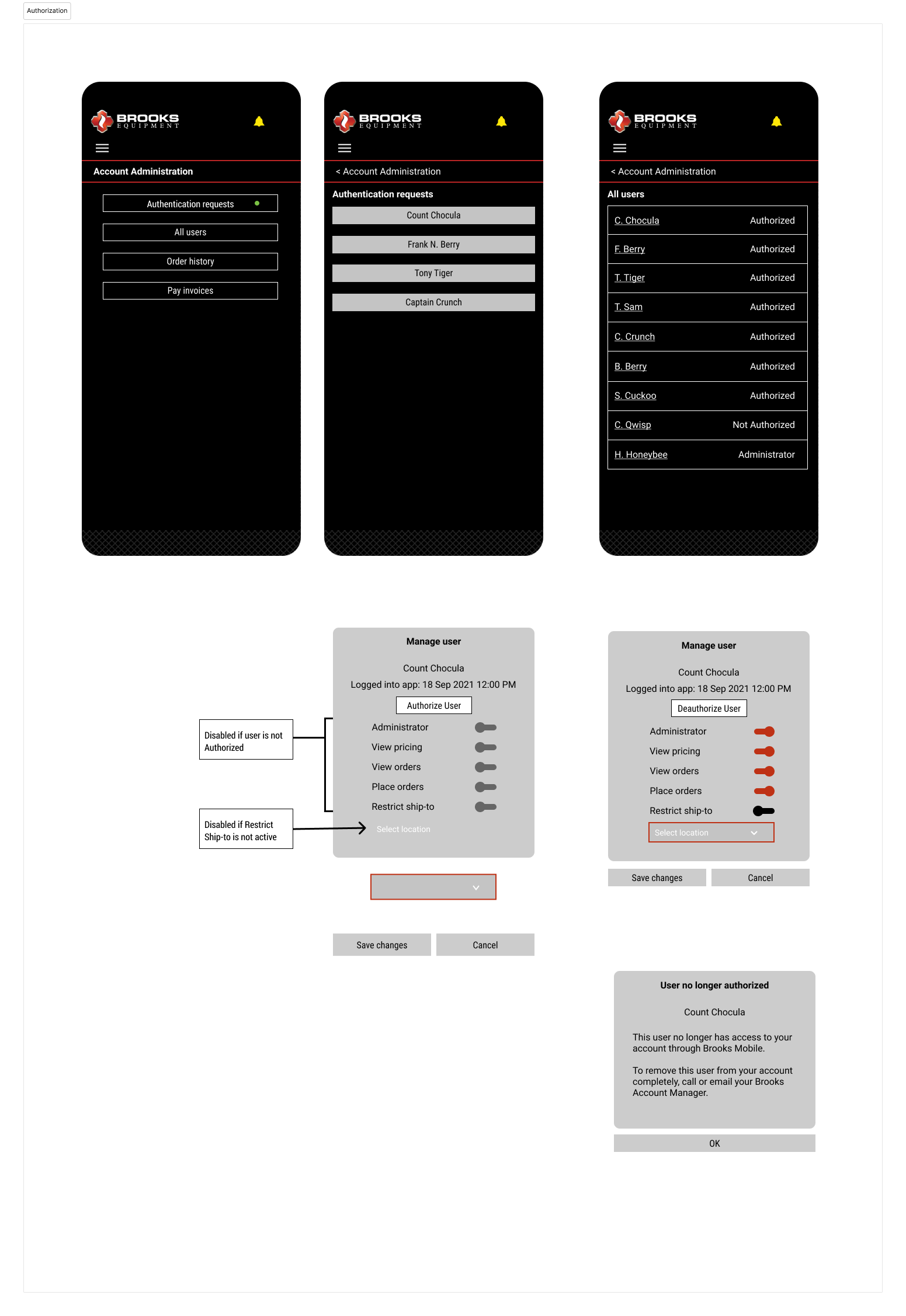
Another large hurdle in this project was user administration.
ACTION
Offline-First Architecture
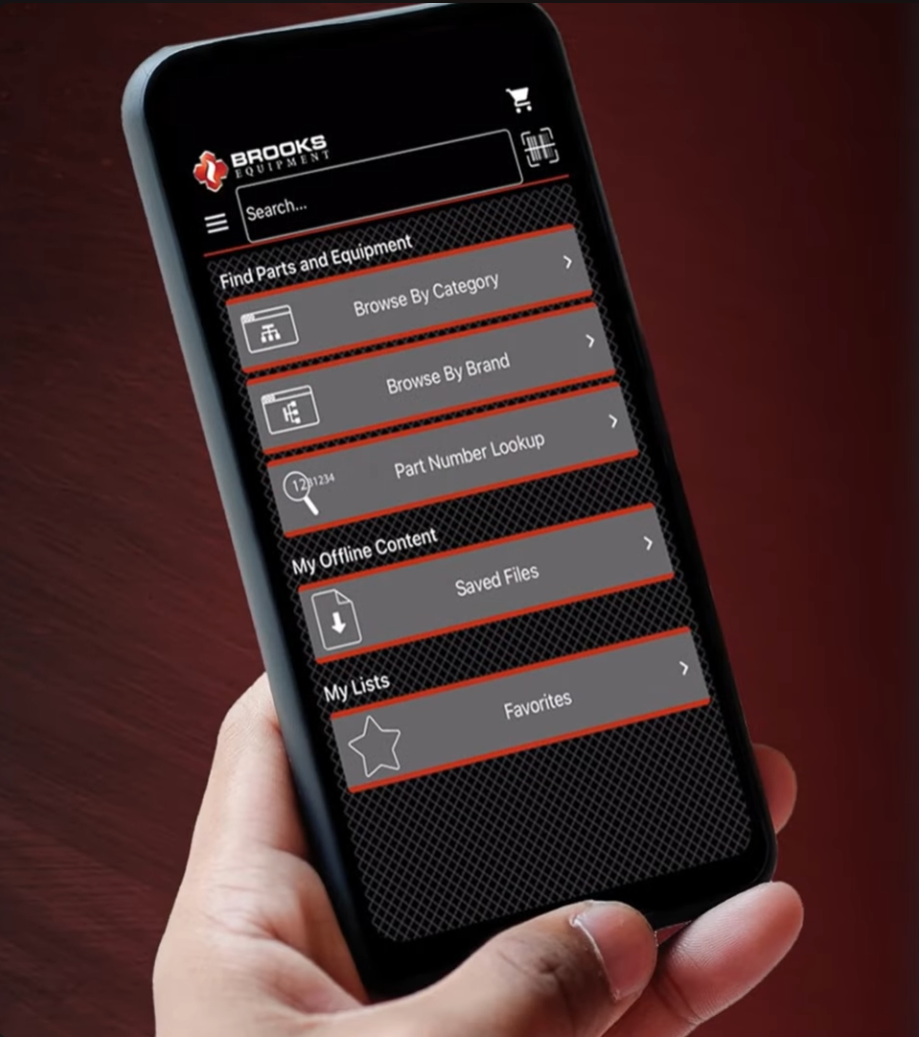
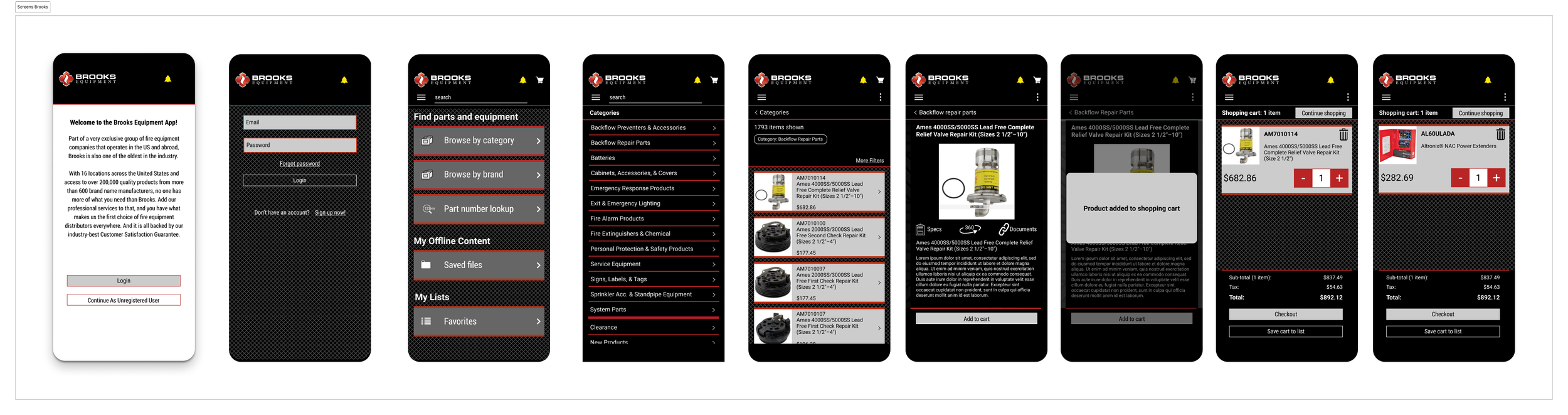
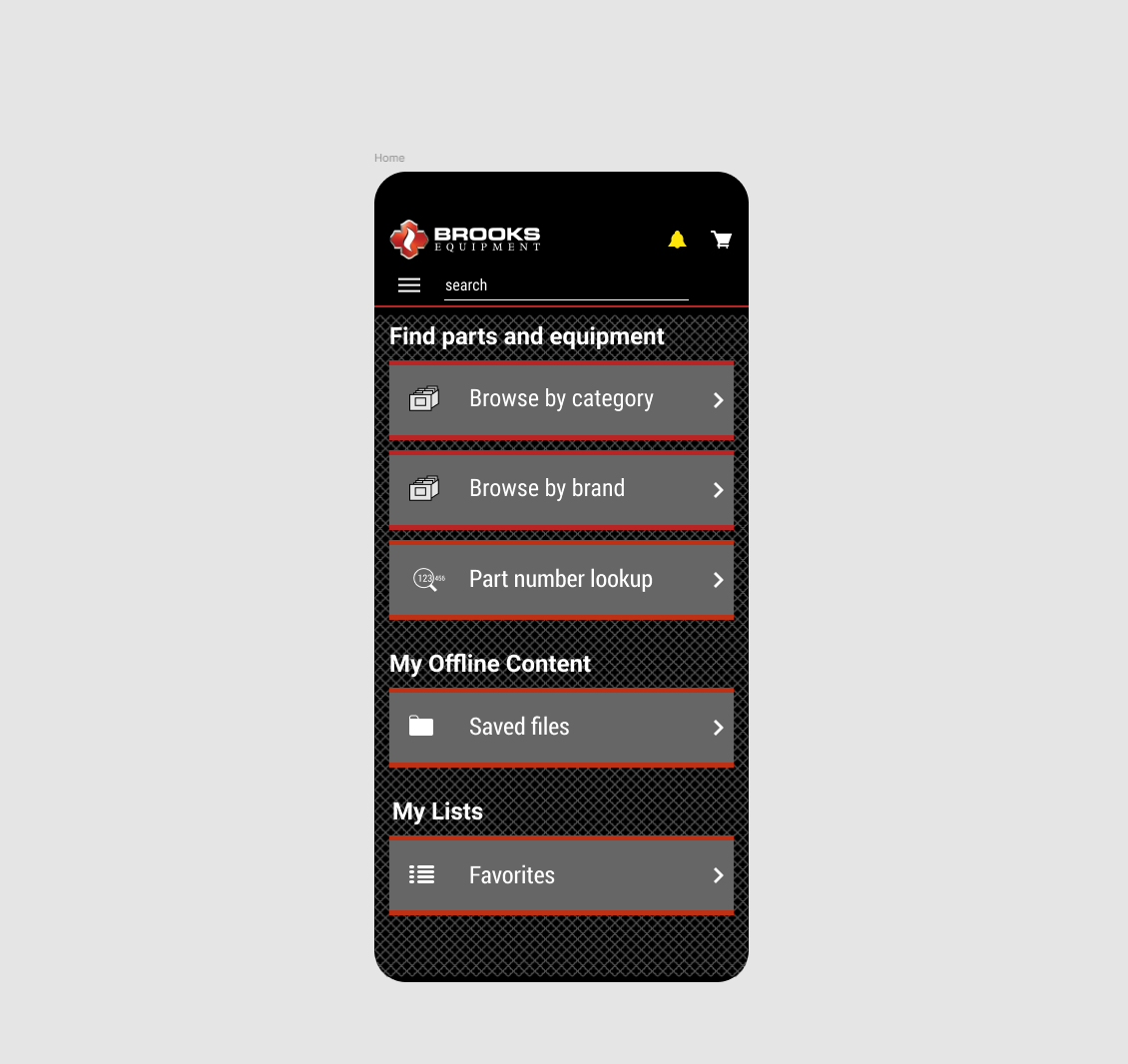
To address "User Control and Freedom," I designed a dedicated "My Offline Content" section where installers could access saved files and critical product data without a signal.
Streamlined Product Discovery
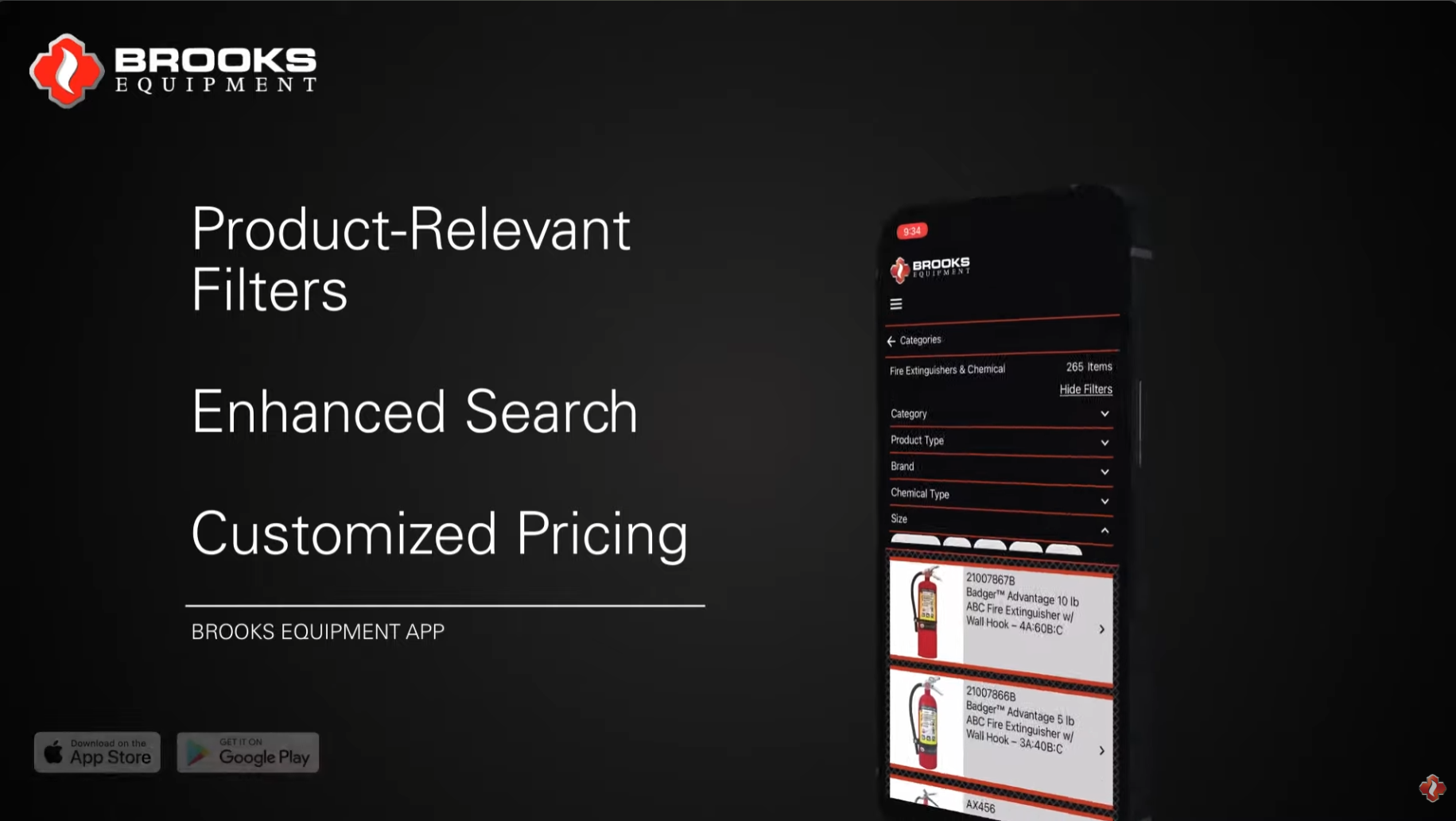
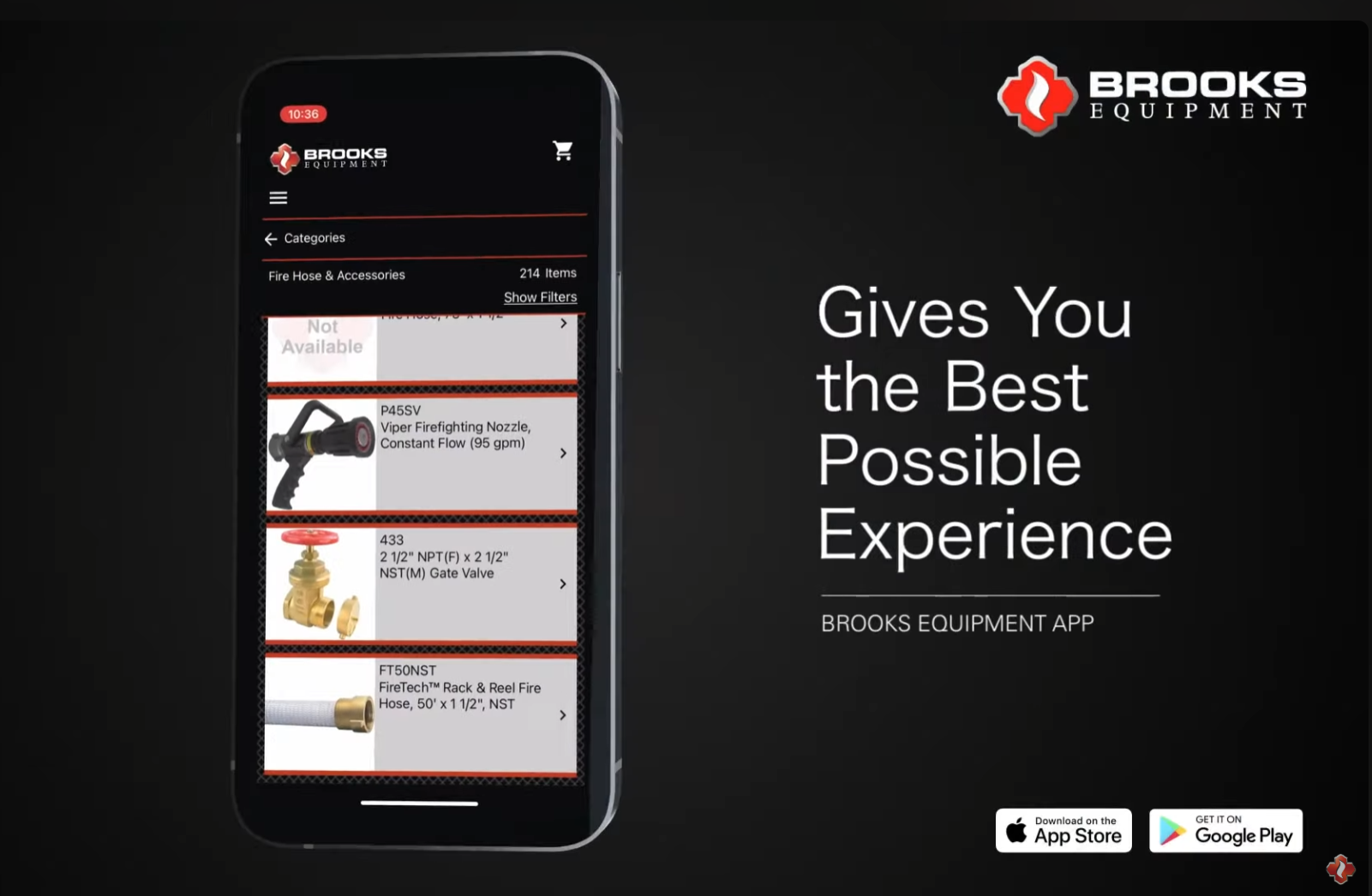
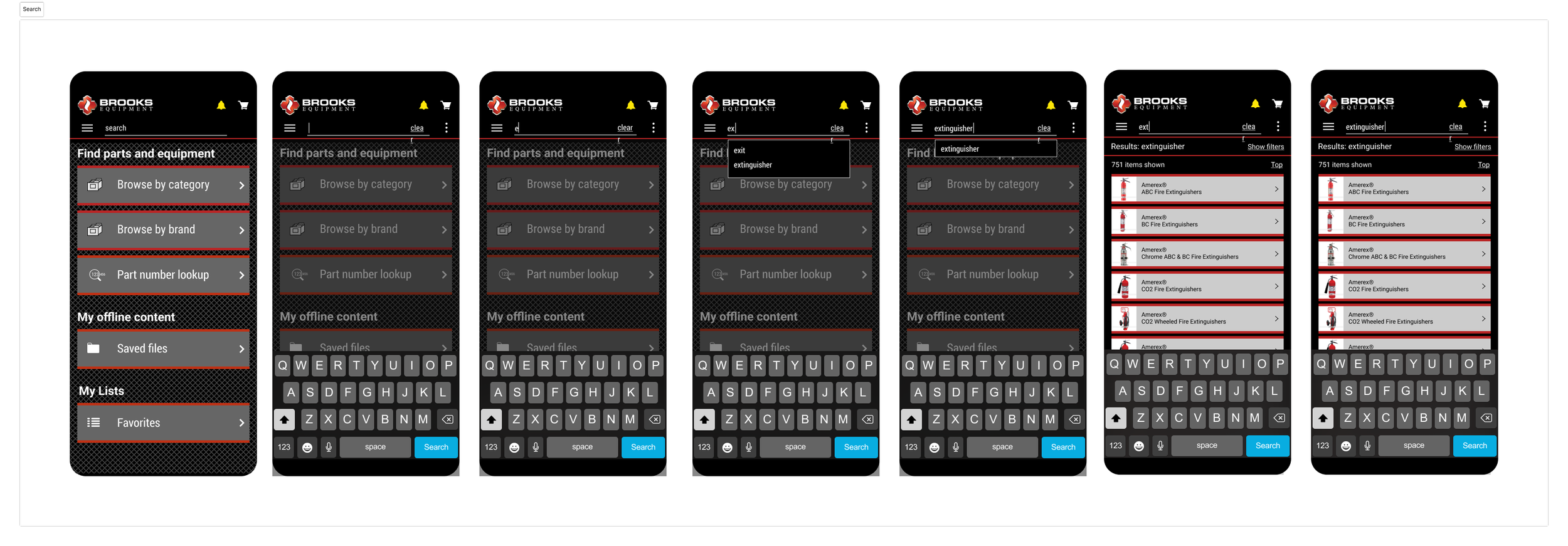
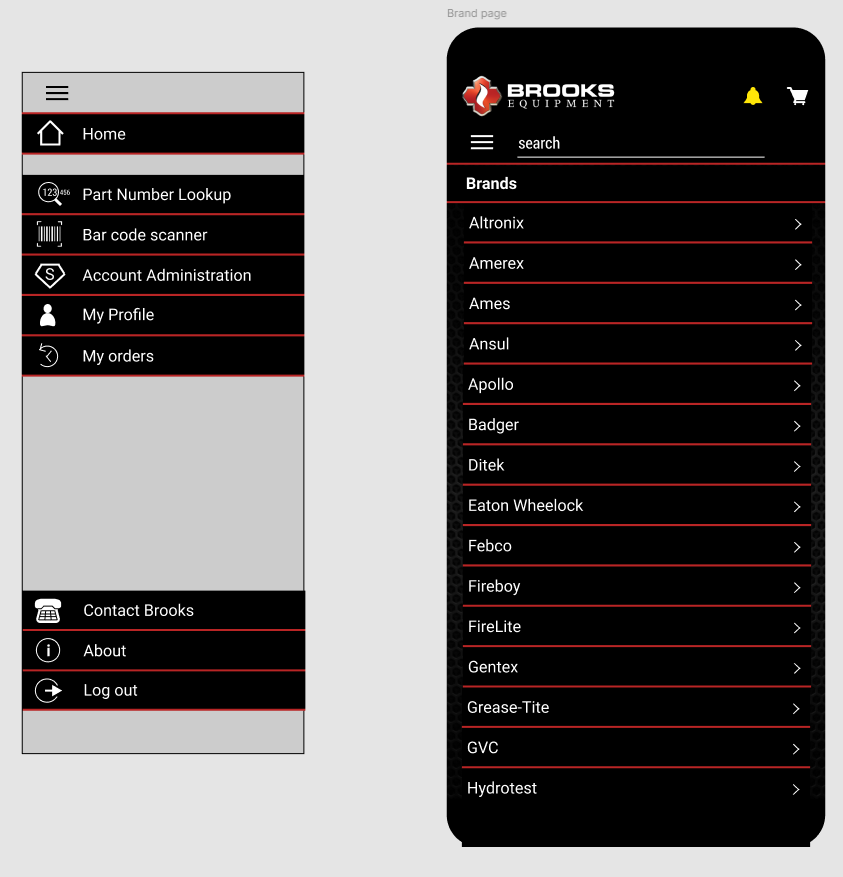
I implemented multiple search and browse pathways—including "Browse by category," "Browse by brand," and "Part number lookup"—to minimize cognitive load and support the "Recognition Rather Than Recall" design heuristic.
Complex Administrative Design
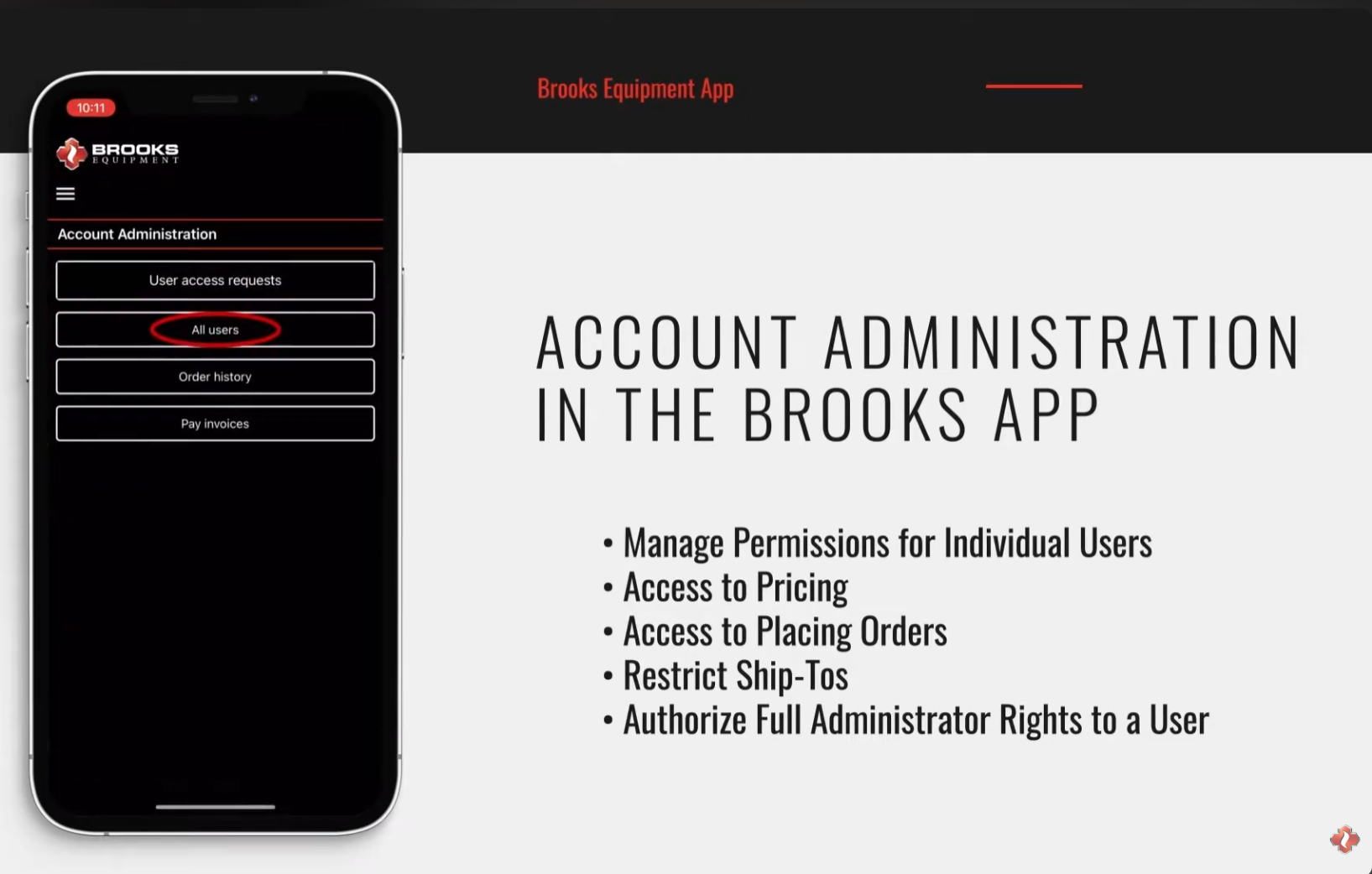
I developed a comprehensive "Account Administration" suite that allowed for managing "Authentication requests" and user permissions (e.g., "View pricing," "Place orders") to ensure adherence to the "Match Between System and the Real World" heuristic for corporate procurement workflows.
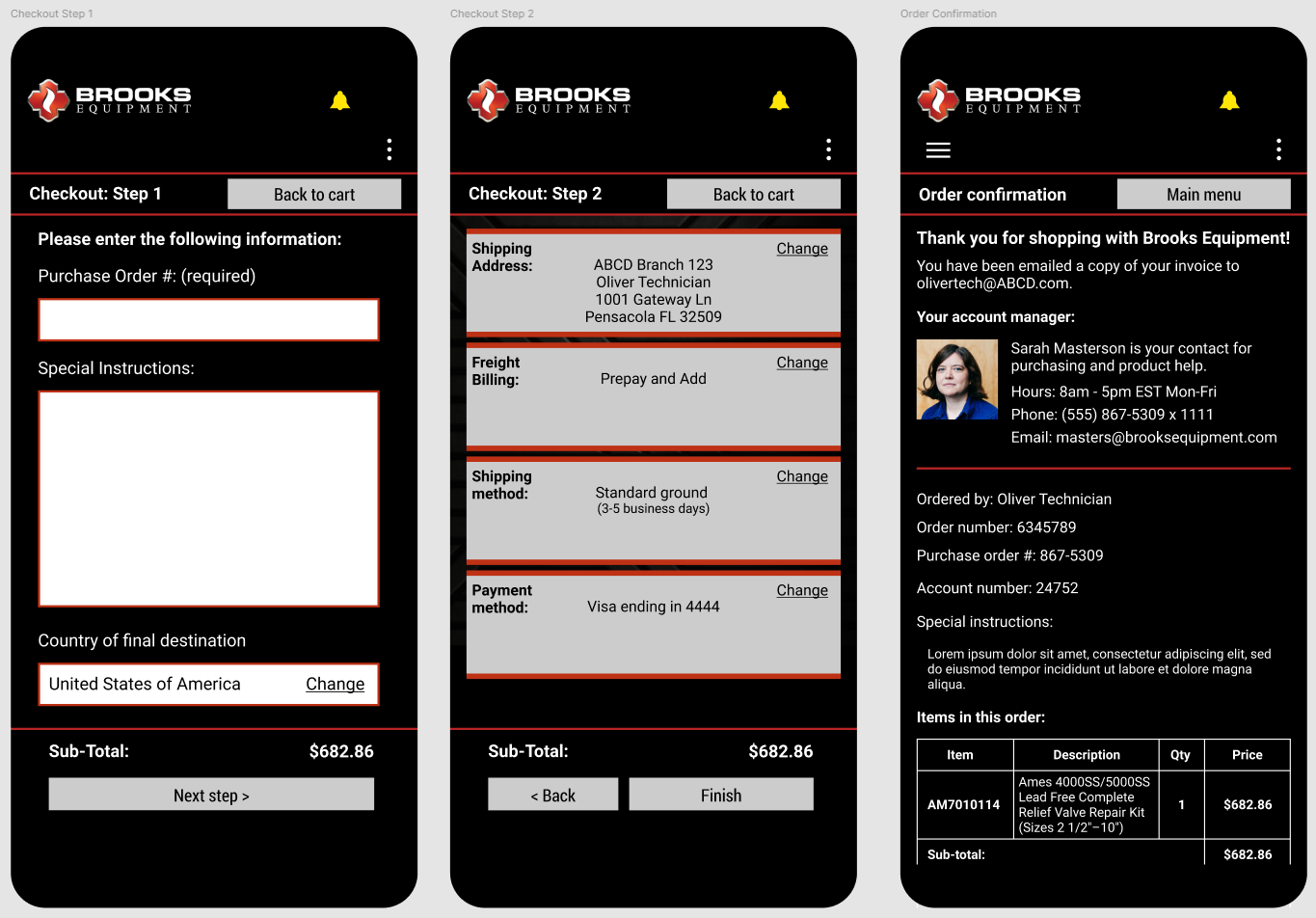
High-Efficiency Checkout
I designed a mobile-optimized shopping cart with clear pricing breakdowns and a "Save cart to list" feature, providing "Flexibility and Efficiency of Use" for installers managing multiple customer quotes simultaneously.
RESULT
The Brooks Equipment app successfully transitioned a legacy web experience into a high-performance mobile tool by adhering to several foundational Usability Heuristics:
Visibility of System Status: By implementing clear "Authorized" badges and progress indicators during "Offline Content" downloads, the design ensures installers always know their connectivity state and account permissions, reducing uncertainty in the field.
Match Between System and the Real World: The navigation was restructured around how installers actually work—using industry-specific terms like "Part Number Lookup" and "Fire Safety Layouts"—ensuring the digital interface mirrors their physical workflow in the van.
User Control and Freedom: The "Offline-First" architecture serves as a massive "emergency exit" for users. When cellular signals drop in a basement or warehouse, the app doesn't fail; it allows the user to continue their work, providing a sense of reliability and control.
Recognition Rather Than Recall: I designed a robust "Recent Searches" and "Saved Carts" feature. Instead of forcing an installer to remember complex 10-digit part numbers or previous quote details, the system surfaces that information contextually, minimizing cognitive load.
Flexibility and Efficiency of Use: To cater to both novice and power users, I incorporated multiple search layers—from broad category browsing for new installers to direct part number entry for veterans—drastically speeding up the path from "Search" to "Order."
Aesthetic and Minimalist Design: Given that installers are often working in cramped, poorly lit environments, I prioritized high-contrast UI elements and large touch targets, stripping away unnecessary visual "noise" to focus strictly on the task at hand: quoting and ordering.
Summary of Impact
By grounding the design in these heuristics, the project moved beyond a simple mobile port of a website. It became a specialized "field kit" that solved the primary pain point of connectivity while improving order accuracy and professionalizing the customer-facing quoting process for Brooks installers.